Brickell vs Edgewater: Which Miami Condo Neighborhood Is Right for You?
A side-by-side comparison of Miami's two most cross-shopped condo neighborhoods. Brickell — denser, walkable, financial-district core; Edgewater — bayfront, quieter, newer construction. Real prices, building stock, walk scores, schools, lifestyle, and which one fits which buyer.

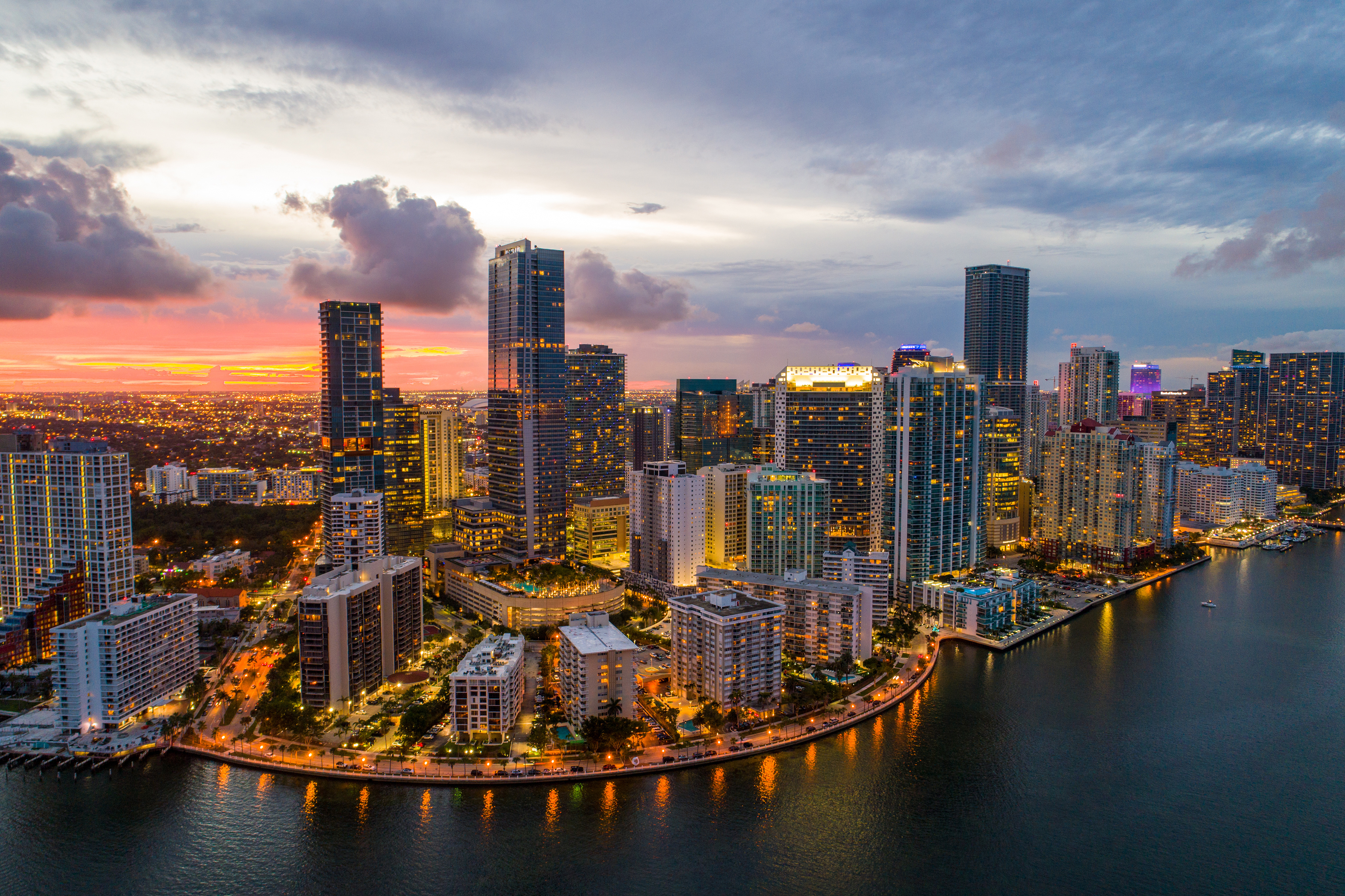
Brickell vs Edgewater: Which Miami Condo Neighborhood Is Right for You?
If you're shopping for a Miami condo within 10 minutes of Downtown and you want walkable city life on or near Biscayne Bay, two neighborhoods make every short list: Brickell and Edgewater. They sit roughly 2 miles apart, both face the bay, and at a glance they look similar — high-rise condo towers with bay or skyline views.
They're not the same buy.
Brickell is Miami's mature financial district. Dense, walkable, with the city's deepest dining and shopping concentration and full Metromover/Metrorail access. Edgewater is the newer-construction luxury bayfront strip just north — quieter, smaller, more residential, with bigger floor plates and newer towers but fewer street-level amenities.
This guide is a direct side-by-side: real numbers, real buildings, real lifestyle differences, and a clear take on who each is built for.
The Quick Answer
Pick Brickell if you want street-level walkability, dense dining and shopping, Metromover/Metrorail access without a car, lower per-square-foot cost, and a deep secondary rental market. Best for young professionals, finance and corporate buyers, year-round residents who use the city daily, and rental-investor buyers prioritizing yield.
Pick Edgewater if you want unobstructed bay views, larger newer floor plates, a quieter residential feel, and access to Wynwood / Design District / Midtown via short drive. Best for second-home buyers, families or older buyers who don't need walk-out dining, view-focused buyers, and investors prioritizing appreciation in a supply-constrained corridor.
The rest of this guide is the why behind those calls.
Geography & Character
Brickell sits immediately south of the Miami River and downtown Miami, bordered by Biscayne Bay to the east and Coral Way to the south. It's 1.19 square miles, organized into three loose sub-districts: Brickell proper (the financial core, dense high-rise residential and office), West Brickell (lower-rise residential), and South Brickell (a transition zone of single-family homes and waterfront condos south of Broadway). Brickell Avenue is the spine — the original "Millionaire's Row" of Miami — running north-south along the bay.
Edgewater sits immediately north of downtown along Biscayne Bay, bounded roughly by the MacArthur Causeway approach to the south and 36th Street to the north, between Biscayne Boulevard and the bay. It's narrower than Brickell — essentially a one-block-deep bayfront strip plus the immediate inland blocks. Margaret Pace Park is the green-space anchor at the center.
Character: Brickell reads as urban Miami. Office workers, hotel traffic, retail at the base of nearly every tower, taxis and Lime scooters constant, Metrorail and Metromover overhead. Edgewater reads as residential bayfront — fewer street-level shops, more dog walking on the bay promenade, the Adrienne Arsht Center and Miami Trolley as primary daily-life touchpoints. Different vibes, both walkable, very different daily textures.
The Numbers (Side by Side)
Both data points below are pulled from our neighborhood data files; live MLS data on individual buildings is on each building's detail page.
| Brickell | Edgewater | |
|---|---|---|
| Population | ~37,500 | ~4,000 |
| Median household income | $103,000 | $96,000 |
| Average condo price | $850,000 | $1,400,000 |
| Price per sq ft | $650 | $880 |
| Median rent | $3,200 | $4,300 |
| Active inventory | ~1,250 listings | ~480 listings |
| Months of inventory | 4.2 | 4.0 |
| YoY price change | +12.3% | +10.5% |
| Walk Score | 97 | 89 |
| Transit Score | 90 | 55 |
| Bike Score | 75 | 82 |
| Crime rating | B | B |
| School rating | A | B |
| Nightlife rating | 5/5 | 4/5 |
| Restaurant rating | 5/5 | 4/5 |
| Shopping rating | 4/5 | 3/5 |
Reading the numbers:
- Edgewater costs more per square foot ($880 vs $650). That's because the Edgewater inventory skews younger and more luxury-tier — newer towers (Missoni Baia, Aria Reserve, Elysee, EDITION Edgewater, Biscayne Beach) built to 2015+ luxury specs, with larger and waterfront-specific floor plates. Brickell's inventory is broader: it includes older 2000s-era towers that pull the average $/sqft down, alongside ultra-luxury (Echo Brickell, Brickell Flatiron, the new St. Regis and Cipriani towers) that pull it up.
- Brickell has 2.6x the inventory. That matters for liquidity. If you ever need to sell in a soft market, Brickell's larger buyer pool and broader inventory comp set creates more predictable exit pricing.
- Both are appreciating fast (+12.3% YoY Brickell, +10.5% Edgewater) and both have similar months-of-inventory near 4 — neither is a soft market.
- Brickell wins on Walk + Transit by a lot. This is the single biggest practical lifestyle difference.
Building Stock
Brickell
Brickell is dense — and broad. The neighborhood spans every condo tier from older Class B/C mid-rises to flagship ultra-luxury operated buildings.
Existing notable buildings:
- Brickell Flatiron — the iconic curved CMC Group tower, 64 floors
- Echo Brickell — ultra-luxury waterfront, Carlos Ott design
- SLS LUX Brickell — hotel-branded operated building
- 1 Hotel & Homes South Beach... wait, this is in Brickell — branded hotel residences (verify per building page)
- Four Seasons Residences Brickell — hotel-operated
- Brickell Heights — Related Group's two-tower complex
- The Bond — newer luxury
- SLS Brickell — Arquitectonica design
Pre-construction in Brickell (active sales as of writing):
- St. Regis Residences Brickell — first ultra-luxury operated hotel-branded tower in Brickell proper
- Cipriani Residences Brickell — Cipriani's first ground-up real estate project
- Baccarat Residences Brickell — Related Group + Baccarat brand
- 888 Brickell (Dolce & Gabbana) — D&G's first global real estate project
- Mercedes-Benz Places — Mercedes-Benz's first FL real estate project
- Waldorf Astoria Residences Miami — technically Downtown but on the Brickell border, one of Miami's tallest planned residential towers
- 619 Brickell (Nobu Residences)
For the full picture, see our Brickell best buildings ranking and Brickell pre-construction ranking.
Edgewater
Edgewater's inventory is narrower but newer. Almost everything in Edgewater was built post-2010, and the bayfront strip in particular is a corridor of ultra-luxury new construction.
Existing notable buildings:
- Missoni Baia — Hani Rashid-designed, Missoni-branded fashion residence
- Aria Reserve — two-tower Melo Group bayfront, currently the tallest residential in Edgewater
- Biscayne Beach — bayfront with private beach club
- Elysee — Two Roads Development boutique tower
- Paramount Bay — established bayfront
- Icon Bay — Related Group bayfront
- Quantum on the Bay — twin-tower complex
Pre-construction in Edgewater (active sales as of writing):
- EDITION Residences Edgewater — Marriott's Edition brand in Miami's bayfront strip
- Cipriani Edgewater — paired with the Brickell Cipriani project
See our Edgewater best buildings ranking and Edgewater pre-construction ranking for the full picture.
Building-stock takeaway: Brickell has more buildings, more variety in tier and age. Edgewater has fewer buildings but skews newer, more bayfront, more design-forward. If you want a 2018+ build directly on Biscayne Bay, Edgewater is statistically more likely to have the option you want. If you want a wider price/quality menu, Brickell is more likely to surface the unit that fits your specific budget.
Walkability and Transit
This is the single biggest day-to-day difference.
Brickell's Walk Score is 97 — "Walker's Paradise" per Walk Score's published methodology. Practically: groceries (Publix, Whole Foods at Mary Brickell Village), gym, dry cleaning, dining, coffee, banking — all walkable from most Brickell residential addresses. Transit Score of 90 means Metrorail at Brickell Station plus the free Brickell Loop Metromover with five stations covering the neighborhood — you can live in Brickell without a car for most days.
Edgewater's Walk Score is 89 — also walkable but a step lower. The bayfront promenade is excellent for walking, but day-to-day errands trend toward driving or trolley to Midtown / Wynwood / Design District. Transit Score of 55 reflects that Edgewater is not on Metrorail and Metromover access is at the edges (Omni Station, Adrienne Arsht Station) — a 12-minute walk for most Edgewater addresses. The free Miami Trolley (Biscayne route) is the practical local transit, running every 20 minutes.
Bike Score flips the other direction: Edgewater is 82 (very bikeable, flat, parallel-park-friendly bayfront) vs Brickell's 75 (denser traffic, more obstacles).
If you genuinely use transit and walk to dinner every night, Brickell is the better fit. If you drive everywhere anyway, Edgewater's slightly lower walk score is invisible.
Dining, Nightlife, Shopping
Brickell wins clearly on density of dining/nightlife/retail. Notable concentrations:
- Mary Brickell Village — open-air dining strip with Perricone's, Truluck's, etc.
- Brickell City Centre — Related Group's mixed-use complex with Saks Fifth Avenue and a deep dining lineup
- Brickell Avenue corridor — Zuma, Komodo, Cipriani, La Mar by Gaston Acurio, Crazy About You
- South Brickell — newer restaurant cluster around SW 12th and 13th
- Brickell East side — Sexy Fish, Casa Tua, Estiatorio Milos, more
Rating context: Brickell scores 5/5 nightlife and 5/5 restaurant in our lifestyle ratings — the highest in Miami outside of South Beach.
Edgewater leans on adjacent neighborhoods for dining density. There's a strong cluster of bay-facing restaurants (Amara at Paraiso, Sexy Fish at the future Aria Reserve podium, neighborhood spots like Mignonette North), but most Edgewater dining nights involve driving 5–10 minutes to:
- Wynwood — younger, casual, brewery-and-art-walk scene
- Design District — fashion + upscale dining (Sushi Saru, Estefan Kitchen, the Estefan)
- Midtown Miami — Sugarcane, Mignonette, Sushi by Bou
- Downtown — Casa Tua Downtown, Klima
Edgewater scores 4/5 nightlife and 4/5 restaurant — still strong, just less density inside the neighborhood itself.
Shopping: Brickell 4/5 (Brickell City Centre handles luxury, Mary Brickell Village handles convenience) vs Edgewater 3/5 (Design District is 5 minutes away and that's where Edgewater residents actually go for luxury retail).
Schools
Brickell scores A on school rating. Edgewater scores B. This is a meaningful gap for family buyers, but with caveats:
- Both neighborhoods feed into Miami-Dade County Public Schools zoning that includes some strong public elementary schools (Southside Elementary serves Brickell; Wynwood Elementary serves Edgewater) and weaker public middle/high zonings.
- Most luxury condo families in either neighborhood enroll in private schools regardless of zoning. Brickell's options include The Cushman School, St. Stephen's Day School, Brickell International Academy, Mater Brickell Preparatory Academy, and proximity to Carrollton School of the Sacred Heart (Coconut Grove) and Ransom Everglades (Coconut Grove). Edgewater shares the same Coconut Grove private-school catchment plus Miami Country Day School access via the I-195 / Biscayne corridor.
Practical take: if K–8 public school zoning matters, Brickell has the edge. If you're using private school, both neighborhoods have effectively the same option set since you'd be driving regardless.
Investment & Market Dynamics
Both have momentum (+10–12% YoY), but the dynamics differ:
Brickell:
- Deep year-round professional rental tenant base (financial-services workers, attorneys, downtown corporate)
- Median rent $3,200, rent-per-sqft $3.20
- Larger condo inventory means longer comp set for valuation — easier to underwrite
- Older inventory at the lower end of the price range still rents reliably
- More short-term-rental restrictions vary by building; many newer towers prohibit STR explicitly
Edgewater:
- Smaller, newer-construction rental pool — typically commands premium rent
- Median rent $4,300, rent-per-sqft $3.90 (higher absolute, higher per-sqft)
- View premium is real — bayfront tier of Aria Reserve / Missoni Baia / Biscayne Beach commands 15–25% over non-bayfront comparable
- Constrained bayfront supply (one block deep) underpins long-term appreciation thesis
- Some buildings allow flexible short-term leasing (Biscayne Beach, Aria Reserve historically have)
- New construction = newer HOA, fewer special assessment risks short-term
Rough investor verdict: Brickell delivers the steadier yield, Edgewater delivers the steeper appreciation curve. Different buyer thesis.
Who Brickell Is For
- The financial-services professional working at Citadel, Goldman, the law firms on Brickell Avenue, or the trading shops that have moved south. Walk to work. Use Metromover. Eat at Truluck's.
- The international second-home buyer who lives elsewhere but wants the brand and walkability when they're in Miami. Hotel-branded operated condos (Four Seasons, Cipriani, St. Regis, soon Waldorf) are over-indexed here.
- The rental investor prioritizing reliable yield. Brickell's tenant pool refreshes constantly with corporate relocations.
- The young couple wanting walkable city life with a 1-bed or 2-bed at a $700–$1.5M entry point. Brickell's broader inventory makes the option set deepest at this band.
Who Edgewater Is For
- The view-driven buyer. If "I want unobstructed Biscayne Bay views, full stop" is your top priority, Edgewater's bayfront strip is the most efficient zip code in Miami for that. Brickell has bay views but you're paying a premium and competing with denser inventory.
- The new-construction buyer. Edgewater is younger product. If you want 2018+ build quality, modern systems, larger floor plates, and the option of being the first owner, Edgewater outpaces Brickell on probability.
- The Wynwood / Design District lifestyle buyer who lives in those neighborhoods for dining and culture but wants the bayfront residential building. Edgewater is the natural fit.
- The quiet-luxury buyer who finds Brickell too loud. Edgewater after 9pm is a different city than Brickell after 9pm.
Frequently Asked Questions
Q: Which is cheaper, Brickell or Edgewater? A: Brickell on a per-square-foot basis ($650/sqft vs $880/sqft). On absolute average price Edgewater is higher ($1.4M vs $850K) but that's a function of newer luxury inventory in Edgewater rather than the same product costing more. For equivalent age and quality, Brickell and Edgewater are roughly comparable, with Edgewater's bayfront strip commanding a modest premium for the bay view.
Q: Which neighborhood is better for families? A: Brickell, narrowly. Better school rating (A vs B), denser walkable amenities, more children's services. But the relevant private-school catchments overlap between both neighborhoods, so the practical difference is smaller than the score suggests. Coconut Grove and Coral Gables remain stronger family neighborhoods than either.
Q: Can I walk to work in either neighborhood? A: Brickell yes (Walk 97, Transit 90 — Metrorail + Metromover put most of downtown in 10 minutes). Edgewater partially — the bayfront promenade is walkable but reaching downtown offices typically requires a short drive, trolley, or Metromover from the Omni/Arts stations.
Q: Are there pre-construction options in both? A: Yes — both are active pre-construction submarkets. Brickell has more total projects (St. Regis, Cipriani, Baccarat, 888 Brickell, Mercedes-Benz Places, Nobu, Viceroy, and several others). Edgewater has fewer but extremely high-profile projects (EDITION, Cipriani Edgewater, and ongoing Aria Reserve releases). See the Brickell pre-construction ranking and Edgewater pre-construction ranking.
Q: Which has better appreciation potential? A: Edgewater's case is supply-constrained — only one block of bayfront, and it's nearly built out. Brickell's case is broader-based but also has more inventory. Recent appreciation is similar (Brickell +12.3%, Edgewater +10.5% YoY). The long-term thesis on Edgewater leans on bayfront scarcity; the long-term thesis on Brickell leans on continued financial-services employment growth in Miami's downtown core.
Q: Which has better short-term rental options? A: Building-specific in both. Many newer Brickell towers explicitly prohibit STR. A handful of Edgewater buildings (Biscayne Beach and a few others) have been more permissive historically. Always confirm in the specific building's condo declaration before buying with STR income in your underwriting.
Q: Is Edgewater safe? A: Both score B for crime rating in our data — meaningfully safer than Miami averages overall but not the top neighborhoods on the metric. Edgewater specifically has improved substantially over the past decade as the new-construction luxury pipeline reshaped the area. Most Edgewater residential blocks today are quiet bayfront residential.
Q: How do I decide between the two? A: Spend a Tuesday evening in each. Brickell on a Tuesday is busy — restaurants are full, the streets are alive. Edgewater on a Tuesday is quiet — you'll hear the bay, watch dogs at Margaret Pace Park, and walk into a dinner reservation without competition. Pick the one that matches the energy you actually want in your daily life. Both are excellent neighborhoods; they're built for genuinely different buyer profiles.
For more context on specific buildings in either neighborhood, browse our Brickell building directory and Edgewater building directory. For broader Miami neighborhood context, see the full neighborhoods guide. To talk through whether Brickell or Edgewater fits your specific situation, get in touch.
Tags
Kyle Benjamin
Founder of The Lieberbaum Group specializing in Miami luxury real estate.
Related Articles
Brickell vs Downtown Miami: Which Urban Core Condo Should You Buy?
A direct comparison of Miami's two adjacent downtown condo districts. Brickell — the established financial district with denser amenities and higher prices. Downtown Miami — the rapidly developing Worldcenter / Aston Martin / Waldorf corridor with lower entry prices and the highest transit score in Miami. Real prices, buildings, lifestyle, and who each fits.
Coconut Grove vs Coral Gables: Which Miami Neighborhood Should You Buy In?
A direct comparison of Miami's two upscale family neighborhoods. Coconut Grove — bohemian bayfront village with marinas and historic charm. Coral Gables — meticulously planned Mediterranean Revival city, prestigious schools, U-Miami home. Real prices, demographics, schools, lifestyle, and who each is built for.
Sunny Isles vs Bal Harbour: Which Miami Beachfront Enclave Is Right for You?
A side-by-side comparison of Miami's two most ultra-luxury beachfront communities. Sunny Isles — the 'Florida Riviera' tower corridor with Porsche, Bentley, Ritz, Armani, and Trump branded high-rises. Bal Harbour — the ultra-curated half-square-mile enclave with St. Regis, Ritz-Carlton, and Bal Harbour Shops. Real prices, demographics, lifestyle, and which is built for which buyer.